How to Unlock Bootloader and Root OnePlus 13
In this guide, we will show you the steps to unlock the bootloader and root your OnePlus 13. The Chinese OEM has just taken off the curtains from its latest offering in the form of the thirteenth iteration of its device. With the latest Snapdragon 8 Elite chipset, up to 1TB storage, 24GB RAM, a 50MP triple rear camera setup, and a massive 6000mAh battery with 100W fast charge, it seems to have checkmarked all the prerequisites that one could have asked for from a flagship.
Moreover, while the OEM is now just a shadow of itself in the custom development, there’s still one tweak that you can carry out without any roadblocks as such- the ability to gain administrative privileges, which in turn will allow you to welcome abode a plethora of mods onto your device [and a few caveats too, discussed below]. So without any further ado, let’s make you aware of the steps to unlock the bootloader and root your OnePlus 13.
- Benefits and Risks of Rooting OnePlus 13
- Root OnePlus 13 via Magisk Patched Init_Boot STEP 1: Install Android SDK STEP 2: Enable USB Debugging and OEM Unlocking STEP 3: Unlock Bootloader on OnePlus 13 STEP 5: Extract OnePlus 13 Payload.bin STEP 7: Patch OnePlus 13 Init_Boot.img via Magisk STEP 8: Boot OnePlus 13 to Fastboot Mode STEP 9: Root OnePlus 13 using Magisk Patched Init_Boot.img
- How to Root OnePlus 13 Via KernelSU
Benefits and Risks of Rooting OnePlus 13
Once you root your device, you will be in a position to flash a plethora of mods. These include the likes of Fox Magisk Modules , Substratum Themes , Xposed Framework via LSPosed , and Viper4Android among others. Along the same lines, you could also flash a custom kernel and implement your desired CPU profile. However, such tweaks do come with a few risks as well.

To begin with, rooting requires you to unlock the bootloader- which will wipe off all the data and could nullify the warranty as well. Likewise, SafetyNet will be triggered [ FIXED ] which will result in your inability to use banking apps [ FIXED ]. So if that’s all well and good, then let’s get started with the steps to root your OnePlus 13 via the Magisk patched init_boot.img.
Root OnePlus 13 via Magisk Patched Init_Boot

The below instructions are listed under separate sections for ease of understanding. Make sure to follow in the exact same sequence as mentioned. Droidwin and its members wouldn’t be held responsible in case of a thermonuclear war, your alarm doesn’t wake you up, or if anything happens to your device and data by performing the below steps.
STEP 1: Install Android SDK
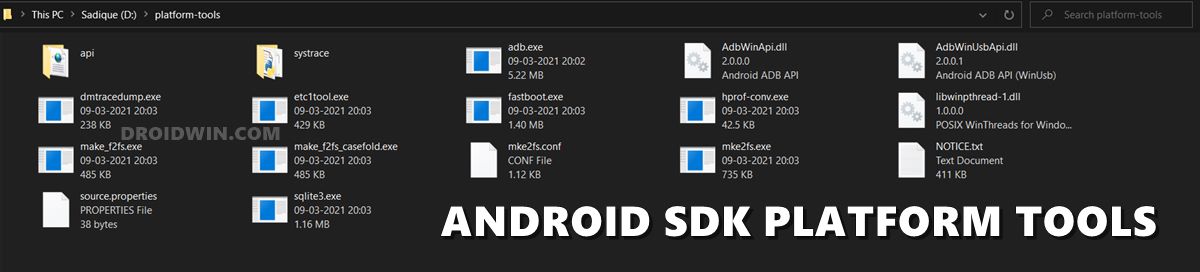
First and foremost, you will have to install the Android SDK Platform Tools on your PC. This is the official ADB and Fastboot binary provided by Google and is the only recommended one. So download it and then extract it to any convenient location on your PC. Doing so will give you the platform-tools folder, which will be used throughout this guide.
STEP 2: Enable USB Debugging and OEM Unlocking
Next up, you will have to enable USB Debugging and OEM Unlocking on your device. The former will make your device recognizable by the PC in ADB mode. This will then allow you to boot your device to Fastboot Mode. On the other hand, OEM Unlocking is required to carry out the bootloader unlocking process.

So head over to Settings > About Phone > Tap on Build Number 7 times > Go back to Settings > System > Advanced > Developer Options > Enable USB Debugging and OEM Unlocking.
STEP 3: Unlock Bootloader on OnePlus 13
After this, you will have to unlock the bootloader on your device. Do keep in mind that this process will wipe off all the data and might nullify the device’s warranty as well. So if that’s all well and good, then refer to our comprehensive guide on How to Unlock Bootloader on OnePlus Devices

STEP 5: Extract OnePlus 13 Payload.bin
- Download the firmware for your device from here or via Oxygen Updater .
- Then extract it and you’ll get a couple of files, including payload.bin.
- Once that is done, download and extract the Fastboot Enhance Tool on your PC.
- Then go to its Payload Dumper tab, click Browse, and load the payload.bin file.
- Now select the init_boot.img, check Allow Incremental, and hit Extract Image.
- Choose the location and the file will be extracted. Now transfer it to your device.
STEP 7: Patch OnePlus 13 Init_Boot.img via Magisk
- Download and install the Magisk App on your device.
- Then launch it and tap on the Install button next to Magisk.
- Choose ‘Select and Patch a File’, navigate to the stock init_boot.img file, and select it.
- Then tap on the Let’s Go button situated at the top right.
- The init_boot.img file will now be patched and placed under the Downloads folder on your device. You should transfer this file to the platform-tools folder on your PC and rename it to magisk_patched_boot.img .
STEP 8: Boot OnePlus 13 to Fastboot Mode
- Now connect your device to the PC via a USB cable. Make sure USB Debugging is enabled.
- Then head over to the platform-tools folder, type in CMD in the address bar, and hit Enter. This will launch the Command Prompt.
- Type in the following command in the CMD window to boot your device to Fastboot Mode adb reboot bootloader
- To verify the Fastboot connection, type in the below command and you should get back the device ID. fastboot devices
STEP 9: Root OnePlus 13 using Magisk Patched Init_Boot.img
- Type in the below command in the CMD window to flash the patched init_boot.img to your device fastboot flash init_boot magisk_patched_boot.img
- Finally, execute the below command to boot your device to the rooted OS: fastboot reboot
NOTE: The above command should automatically flash the init_boot to both the slots. However, if you face any issues while executing that command, then you could also manually specify the slots while flashing. In other words, you could flash the init_boot to both partitions by executing the below two commands:
fastboot flash init_boot_a magisk_patched_boot.img

fastboot flash init_boot_b magisk_patched_boot.img
How to Root OnePlus 13 Via KernelSU
How to Root OnePlus 13 via KernelSU Next and SUSFS
- How to Install Android Auto on OnePlus 13
- How to Install Google Apps on OnePlus 13
- Downgrade OnePlus from Android 15 to 14: OxygenOS 15 to 14

- abdullah 1 year ago Reply the best way i use to extract the init_boot file, that i use MT manger on my phone and extract the file from the payload.bin. its easy and simple
(Cancel Reply)
Δ
How to Root OnePlus 13 via KernelSU Next and SUSFS
In this guide, we will show you the steps to root your OnePlus 13 via KernelSU Next and SUSFS. There exist quite a few ways using which you can root your Android device, with Magisk reigning supreme at the top. However, we are seeing a slight change in the priority among the tech enthusiasts. There has been a minuscule yet noticeable shift among the users from Magisk to its counterparts.
These include the likes of unofficial forks of Magisk like Kitsune or Delta, or other third-party alternatives like KernelSU, APatch, and KernelSU Next. So why this change all of a sudden? Well, it has now become quite a challenging task to hide root as banking and payment apps have put in place numerous checks for the Magisk binary.
However, they are yt to do so for the aforementioned apps. Hence, if you rooted via any of those apps, then there’s a high chance that you can easily bypass the root checks on your device and use payment apps without any issues. So due to all these reasons, this guide will show you the steps to root your OnePlus 13 via KernelSU Next and SUSFS. Follow along,
- How to Root OnePlus 13 via KernelSU Next and SUSFS METHOD 1 [Shorter Method] METHOD 2 [Longer Method]
How to Root OnePlus 13 via KernelSU Next and SUSFS

Before starting, please take a backup of all the data on your device. Droidwin and its members wouldn’t be held responsible in case of a thermonuclear war, your alarm doesn’t wake you up, or if anything happens to your device and data by performing the below steps.
METHOD 1 [Shorter Method]
How to Root any OnePlus via KernelSU Next and SUSFS
METHOD 2 [Longer Method]
- To begin with, download the same firmware that is installed on your device.
- You may verify the same from the device’s Version Number.
- Now extract it, get the payload.bin file, and load it into the Fastboot Enhance Tool . Then extract the init_boot.img file from it.
- Next up, download and extract the Android SDK Platform Tools on your PC.
- Then enable USB Debugging and OEM Unlocking, and connect your device to PC via USB.
- Now unlock the bootloader on your device via the fastboot flashing unlock command.
- Then install the KSU Next app > patch the init_boot.img file via it.
- Now transfer this patched file to platform-tools and rename it to patched_init_boot.img
- Next up, download and install the Key Attestation app on your device.
- Then download the 6.6.66 kernelsu next boot.img (or more than .66 if available) from here .
- Now boot your device to the Fastboot Mode via: adb reboot bootloader
- Then flash the patched init_boot via: fastboot flash init_boot patched_init_boot.img
- Now restart your device, launch KernelSU Next, and make sure it is working in LKM Mode.
- Then get the vbmeta.img file from the same firmware version that is installed on your device.
- Now transfer the file to the platform-tools folder. Then boot your device to the Fastboot Mode adb reboot bootloader
- Now disable Android Verified Boot by flashing vbmeta.img as follows: fastboot –disable-verification flash vbmeta vbmeta.img
- Now flash the boot.img as follows: fastboot flash boot boot.img
- Then flash the SUSFS module from here . Now copy the verified boot hash under “root of trust”
- Go to /data/adb/VerifiedBootHash and put the string you copied in the text file
- Finally, restart your device for the changes to take place.
- How to Switch from Magisk to KernelSU
- How to Hide Root via KernelSU on Rooted Android
- Rooting via Magisk/KernelSU/APatch: Boot or Init Boot
- How to Flash Kernel with Integrated KernelSU on Galaxy S24 Ultra
- Freddy 2 months ago Reply Your instructions don’t make sense Longer method 4.Then install the KSU Next app > patch the init_boot.img file via it. Okay explain where to get this init_boot.img Sadique Hassan 2 months ago Reply sorry mate for the confusion. I have updated the guide with more clarity..
- Muji 11 months ago Reply Please give a susfs img for one plus 13r
(Cancel Reply)
Δ
