Unlock Bootloader and Root OnePlus 13R/Ace 3 via KernelSU
In this guide, we will show you the steps to unlock the bootloader and then root your OnePlus 13R/Ace 3 via KernelSU. The affordable variant of the latest flagship manages to checkmark all the prerequisites without bringing a hole in your pocket. While it might take some time for the device to pick up pace in the custom development [as it has recently been released], however, you can still gain administrative privileges over it- either via Magisk or KernelSU. In this guide, our focus will be on the latter.
As far as the reason for the same is concerned, KernelSU uses the kernel instead of the boot and hence is less detectable by banking and payment apps [and even the likes of Intune, Outlook & Teams] when compared with Magisk. Along the same lines, KernelSU is also more actively maintained than its counterpart. So owing to all these benefits, let’s make you aware of the steps to unlock the bootloader and root your OnePlus 13R/Ace 3 via KernelSU.
- Benefits and Risks of Rooting OnePlus 13
- Root OnePlus 13 via Magisk Patched Init_Boot STEP 1: Install Android SDK STEP 2: Enable USB Debugging and OEM Unlocking STEP 3: Unlock Bootloader on OnePlus 13 STEP 4: Extract OnePlus 13R/Ace 3 Payload.bin STEP 5A: LKM Root via KernelSU STEP 5B: GKI Root via KernelSU STEP 5C: Root via PrePatched Kernel
Benefits and Risks of Rooting OnePlus 13

Once you root your device, you will be in a position to flash a plethora of mods. These include the likes of Fox Magisk Modules , Substratum Themes , Xposed Framework via LSPosed , and Viper4Android among others. Along the same lines, you could also flash a custom kernel and implement your desired CPU profile. However, such tweaks do come with a few risks as well.

To begin with, rooting requires you to unlock the bootloader- which will wipe off all the data and could nullify the warranty as well. Likewise, SafetyNet will be triggered [ FIXED ] which will result in your inability to use banking apps [ FIXED ]. So if that’s all well and good, then let’s get started with the steps to root your OnePlus 13 via the Magisk patched init_boot.img.
Root OnePlus 13 via Magisk Patched Init_Boot

The below instructions are listed under separate sections for ease of understanding. Make sure to follow in the exact same sequence as mentioned. Droidwin and its members wouldn’t be held responsible in case of a thermonuclear war, your alarm doesn’t wake you up, or if anything happens to your device and data by performing the below steps.
STEP 1: Install Android SDK
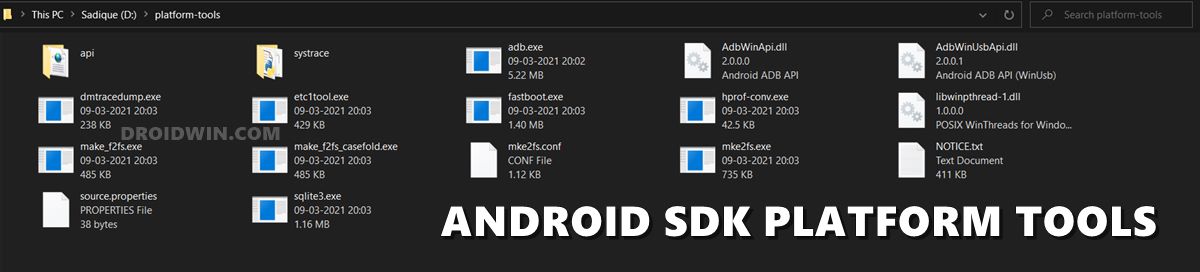
First and foremost, you will have to install the Android SDK Platform Tools on your PC. This is the official ADB and Fastboot binary provided by Google and is the only recommended one. So download it and then extract it to any convenient location on your PC. Doing so will give you the platform-tools folder, which will be used throughout this guide.
STEP 2: Enable USB Debugging and OEM Unlocking
Next up, you will have to enable USB Debugging and OEM Unlocking on your device. The former will make your device recognizable by the PC in ADB mode. This will then allow you to boot your device to Fastboot Mode. On the other hand, OEM Unlocking is required to carry out the bootloader unlocking process.

So head over to Settings > About Phone > Tap on Build Number 7 times > Go back to Settings > System > Advanced > Developer Options > Enable USB Debugging and OEM Unlocking.
STEP 3: Unlock Bootloader on OnePlus 13
After this, you will have to unlock the bootloader on your device. Do keep in mind that this process will wipe off all the data and might nullify the device’s warranty as well. So if that’s all well and good, then refer to our comprehensive guide on How to Unlock Bootloader on OnePlus Devices . In short, boot your device to Fastboot Mode > use fastboot flashing unlock command > Confirm Unlock the Bootloader.

STEP 4: Extract OnePlus 13R/Ace 3 Payload.bin
- Download the firmware for your device from here or via Oxygen Updater .
- Then extract it and you’ll get a couple of files, including payload.bin.
- Once that is done, download and extract the Fastboot Enhance Tool on your PC.
- Then go to its Payload Dumper tab, click Browse, and load the payload.bin file.
- Now select the init_boot.img, check Allow Incremental, and hit Extract Image.
- Choose the location and the file will be extracted. Now transfer it to your device.
STEP 5A: LKM Root via KernelSU
- Download and install KernelSU or KernelSU Next on your device.
- After that, launch the app and patch the stock init_boot.img file.
- Once done, transfer the patched file to the platform tools folder.
- Now boot your device to Fastboot Mode via the below command: adb reboot bootloader
- To verify the Fastboot connection, type in the below command: fastboot devices
- Then type the below command to flash this patched file: fastboot flash init_boot_patched.img
- Finally, type in the below command to boot to the rooted OS: fastboot reboot
STEP 5B: GKI Root via KernelSU
- Download the kernel corresponding to your device: OnePlus 13R | OnePlus Ace 3
- Next up, download and install a Kernel Flasher app .
- Then launch it, give it root access, and restart device.
- Finally, launch app > flash the kernel > restart device.
STEP 5C: Root via PrePatched Kernel
OnePLus 13 also has a prepatched kernel with KernelSU that you can simply flash via the recovery and obtain root. Do check out the below guide to try it out:
How to Root any OnePlus via KernelSU Next and SUSFS
- How to Switch From ColorOS to OxygenOS on OnePlus 13
- How to Unbrick Your OnePlus 13 via Fastboot Commands.
- Flash OxygenOS 15 on OnePlus 13 via Fastboot Commands
- Enable Other Music Players in Live Capsule on OnePlus 13

- Krishna 8 months ago Reply Link is not working for: Download the kernel corresponding to your device: “OnePlus 13R” Sadique Hassan 8 months ago Reply Yup, that has been removed by the developer. With that said, I will highly advice you check out the STEP 5C as it is an extremely easy way of rooting OnePlus 13 via KernelSU Next.
(Cancel Reply)
Δ
How to Root any OnePlus via KernelSU Next and SUSFS
In this guide, we will show you the steps to root your OnePlus device using KernelSU Next and SUSFS. When it comes to gaining administrative privileges over your device, Magisk has long been the go-to choice for tech enthusiasts. However, over the last few months, we have witnessed a slight change in this trend, with many people moving towards KernelSU.
One major reason for the same is the issues with hiding the root when it comes to Magisk. Even if you end up passing the Basic and Device test [well, in some cases, even the Strong Test] and hide the Magisk app, the banking and payment apps will still end up identifying that your device is rooted via Magisk, and hence they will refuse to function.
Fortunately, at least for now, that isn’t the case with KernelSU. This, when combined with the SUSFS, gives you the most stringent root hiding environment along with a slew of additional advanced-level tweaks. So, without any further ado, let’s make you aware of the steps to root your OnePlus device using the combination of KernelSU Next and SUSFS. Follow along.
- How to Root any OnePlus Phone via KernelSU Next and SUSFS SUPPORTED DEVICE LIST INSTALLATION STEPS
- How to Install OnePlus Kernel with KernelSU Next without TWRP
How to Root any OnePlus Phone via KernelSU Next and SUSFS

Before starting, take a backup of all the data on your device, just to be on the safe side. Droidwin and its members wouldn’t be held responsible in case of a thermonuclear war, your alarm doesn’t wake you up, or if anything happens to your device, and data by performing the below steps.
SUPPORTED DEVICE LIST
As of now, these are the supported devices, though more devices will be added in the near future, so stay tuned!
OP ACE 2 PRO

OP ACE 2

OP ACE 3V

OP ACE 5

OP ACE 5 PRO

OP NORD 4

OP OPEN

OP PAD 2

OP 10 PRO

OP 10T

OP 11R

OP 11

OP 12

OP 12R

OP 13

OP 13R

OP 13S
INSTALLATION STEPS

- First off, download the required files from below: OnePlus Kernel with KernelSU Next and SUSFS Support KernelSU Next App SUSFS Module
- Then install the TWRP Recovery onto your device.
- Now reboot your device to TWRP Recovery using: adb reboot recovery // from the OS fastboot reboot recovery // from Fastboot Mode
- Now go to Install > select the OnePlus Kernel > flash it.
- Then go to Reboot and select System to boot to the OS.
- Next up, install the KernelSU Next app. Then launch it.
- Go to Modules, tap Install, and flash the SUSFS Module.
- Now, hit Reboot. Once it boots up, tap Open next to SUSFS.
- Then tap on Custom SUSFS Settings and customize it as per your liking.
- How to Root OnePlus 13 via KernelSU Next and SUSFS
- How to Root OnePlus 11 using KernelSU Next and SUSFS
- Detailed Guide to Hide Root via KernelSU on Rooted Android
- How to Install OTA Updates on Rooted Device via KernelSU
How to Install OnePlus Kernel with KernelSU Next without TWRP

Some OnePlus devices might not have a working TWRP Recovery. So in such cases, here’s what you need to do:
- First off, download the required files from below: OnePlus Kernel with KernelSU Next and SUSFS Support KernelSU Next App SUSFS Module
- Download the same firmware which is installed on your device.
- Then extract the init_boot.img from it using Fastboot Enhance.
- Now transfer the file to your device. Then install KernelSU Next.
- Launch it, tap on the downward arrow > select a file > init_boot.
- File will now be patched. Transfer it to the platform-tools folder.
- Now open the Command Prompt inside the platform-tools folder.
- Then type in the below command to boot your device to Fastboot. adb reboot bootloader
- Now type in the below command to flash this patched init_boot: fastboot flash init_boot patched_init_boot.img
- Then type the below command to boot the device to the rooted OS fastboot reboot
- Install the Kernel Flasher app , launch it, and tap View next to both slots.
- Then note down the Slot name [A or B] that gives you the Flash option.
- Now tap on Flash > Flash AK3 ZIP > select the OnePlus Kernel.
- Once done, restart the device for the kernel to be up and running.
- Next up, install the KernelSU Next app. Then launch it.
- Go to Modules, tap Install, and flash the SUSFS Module.
- Now, hit Reboot. Once it boots up, tap Open next to SUSFS.
- Then tap on Custom SUSFS Settings and customize it as per your liking.
- ae 3 months ago Reply does it not work on oxygenos 16 because the apps are no longer being granted root access
- Akash 5 months ago Reply Need kernal su file for oneplus 8 pro running 13
(Cancel Reply)
Δ
